Another Person's Haiku
The jaded future of AI

1983
The third-grade classroom was on the ground floor. We had not yet graduated to climbing the stairs. Our eight and nine-year-old legs had only started to build muscle; our handwriting was jaggy and inelegant with undeveloped skill.
Our teacher, Mrs. McLaughlin, had us make 5x7 booklets by ironing glue-backed fabric onto cardboard. We sewed in blank pages and transferred a trimester’s worth of our primitive Haikus by pencil. We were encouraged to illustrate our poems. My most colorful one — complete with an orange pumpkin — was something like:
Oh, Jack-o-lantern
Grinning in the darkest night
Boo, you are scaring me
But on the last page was another Haiku.
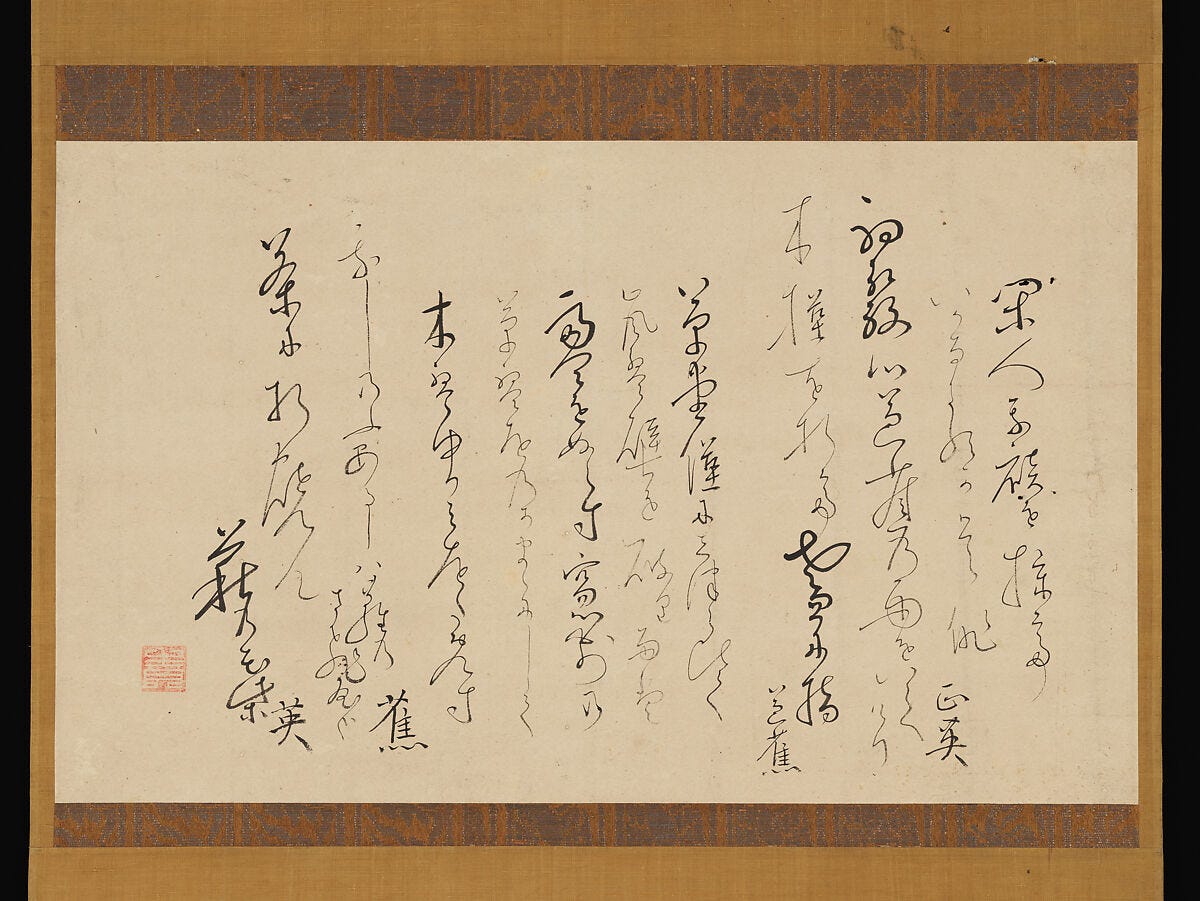
I can’t quite remember it—due to a cognitive debt—that was different than the others. The book is gone now, but the final poem was elegant, clean like still water, pointing to essential natural truths. It also was not mine. I had stolen it weeks earlier at the public library, when I found myself in the poetry section unattended but armed with a notebook and the spirit of enterprise. I copied the old-master poem down and turned it in as my own.
No one caught me. Instead, I received praise for my fine work. And, by the act of hand-copying for a second time, it was memorialized as mine. I recall I felt some shame (Thou shalt not lie)—but mostly just the excitement of getting away with it, the speed of the work, and the almost-belief that the poem was mine now.
What I could not have known then is that it was my first intoxicating pass with the world of AI.
2024
Do you remember last year? Do you remember when we were wringing our hands that AI was developing faster than we could control it?

2025
In June, I signed up for the paid version of ChatGPT ($20 per month) to use for work. With my prompt writing, I stopped using carbon-intensive words like please and thank you and focused on the specifics of audience, tone, statistical significance of data, word length, channel distribution, and other marketing-like filters. Can I even write anymore?
My inner turmoil in recent weeks about AI has shifted entirely from what it is doing to the world to what it is doing to my brain.
A popular piece of research circulated a few weeks ago about brain rot. I feel it. I actively feel my own brain’s ability to think analytically disintigrate after repeated (even just two or three) AI sessions. If I can feel this, can the other 2.5 billion daily prompts of ChatGPT? Yes. Do they care? Does it matter?
I was on a call with a former boss and San Francisco colleague who works in venture capital and investing; her energy hummed with “Where’s the next deal?” I asked her about her views on AI. She waved me off. “There’s not going to be any AI, it’s just going to be everything,” she said flatly.
In the late 90s I was in undergrad at Stanford, where the infrastructure of the web was being built all around me. Mosaic. Netscape. Ask Jeeves. Yahoo. The internet was new, shiny, and exciting. I was an early adopter and went to work for a tech company, Homestead, in 2000 (40,000 stock options! Look at me!). The World Wide Web — as most people 40 and older might recall — was fun, interesting, and democratic. Twenty-five years later, and it’s just the polluted industrialized air we breathe. It’s slop galore.
As a person with long-term sobriety, I recognize a “hit” of a drug when I get one. AI is a drug. It’s not just the internet; it’s something else. As I wrote about before, what’s happening right now is the difference between a world with widely available electricity and a world without. The 24-hour illumination is here. We can never un-see again.
What is this AI drug all about? Is it the speed at which you can solve almost any problem? Write any brief or talking points in seconds? Having any and all knowledge at your fingertips? The credit you can freely take without having made any contribution or effort? The dopamine hit is instant, tiny, diminishing in its returns. But still addictive.
And it’s a mind-to-heart eraser.
In a recent work meeting my AI-created suggestions for three mini video edits, derived from a lengthy transcript, was praised. I credited myself for writing a good prompt and credited ChatGPT for the output. As a worker, my primary satisfaction was just getting the task completed so I could move on to other things. No pride of ownership. It was another man’s Haiku.
I have been trying hard in recent weeks to sink into my own living Haikus: The pleasure of hearing rain at night, the smell of creosote, sitting in the morning air to meditate with others in recovery under a large apricot tree, spooning Bruno, the red-breasted House Finches in my neighbor’s bird feeder.
When I was first getting sober, I was desperate for all the wisdom — books about getting sober, books about how Buddhism blended with 12 steps, books about crawling out of depression, books about dysfunctional families and codependency. I read them all. I made marginalia. I had a lot of ah-ha moments. Recently, I realized how long it has been since I read something that shifted my recovery and spiritual understanding of the world. John said, “You’re all grown up now!” as if it’s a good thing (it is) but I also wonder if too much has been learned. That I have now doomscrolled my way through every post on why my ACE score predetermined me to become an alcoholic in recovery.
Last night, I prompted ChatGPT what is god. (No punctuation, who needs that?) Here’s the answer.
The output of words checked all the boxes and was probably an eerily similar answer to what I would come up with on my own. It was clinical and cold. And there was no earned or lived experience with the grapple.
What is god? Seriously, what is it?
2026
I am future-casting this. I predict that well within the next year, we won’t care about the dissonance between earned wisdom and words that represent some semblance of wisdom.
The poignance and value of hard-earned knowledge will become obsolete and entirely unknown to a new generation of people. The most valuable thing will be the shortest and fastest way to get from Point A to Point B. The nature of our suffering will shift in the absence of knowledge gaps. No inquiry will require hard thinking or effort or mental wrestling because we can always construct a prompt to find a rational answer. Just ask AI.
Brain rot will have given way to a kind of moral rot without necessary grist in the mill.
Or—let us imagine a different future: In our household, we have agreed that John will remain a Gold Star AI Virgin. He has never been on ChatGPT or Instagram or TikTok, or LinkedIn. He’s committed to being our control group of one in this living Mountainhead experiment. No pressure, babe, but you have to be keeper of the old ways while I venture forth into Westworld.
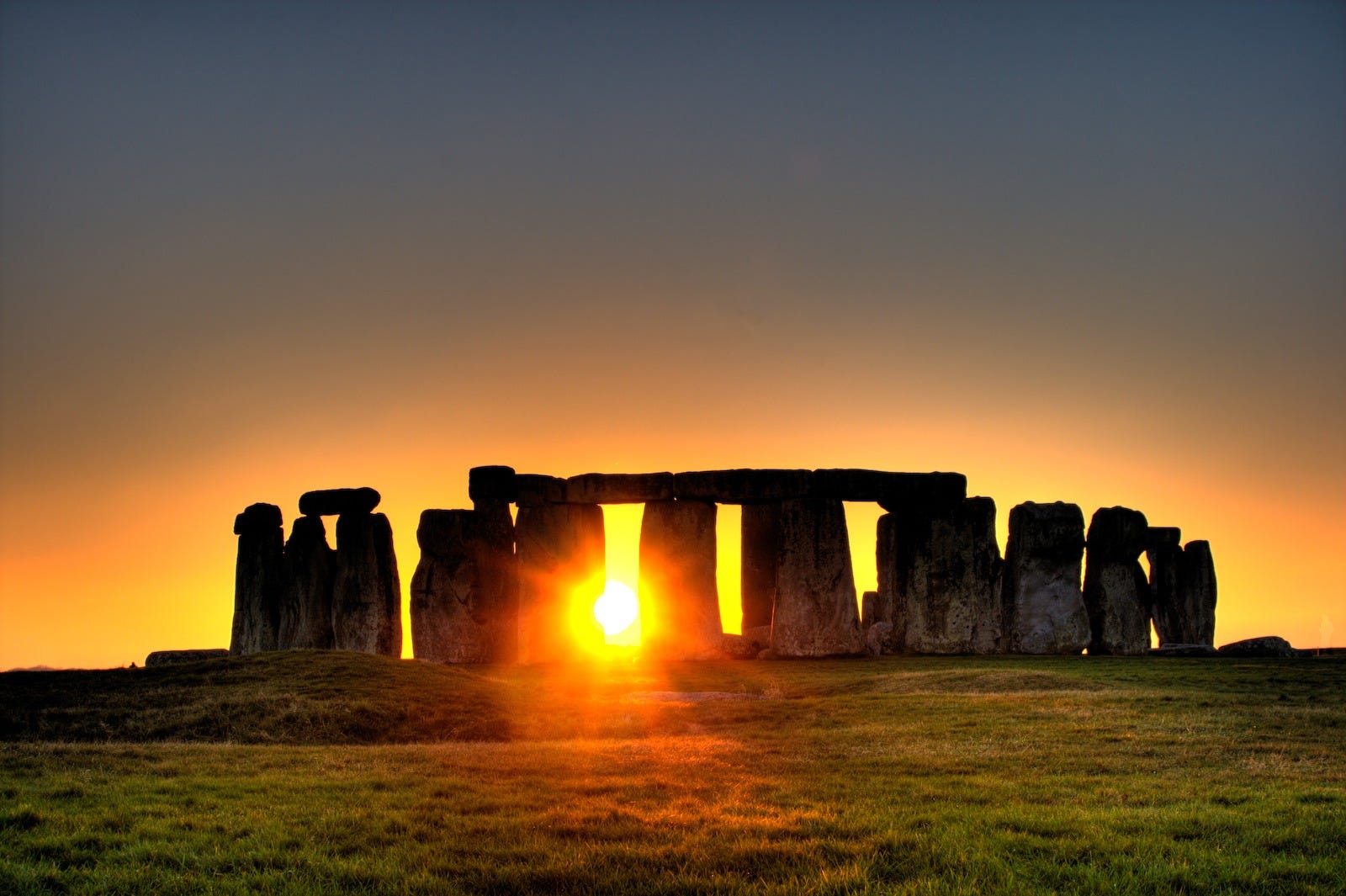
Will I make it back to the Standing Stones? And if I do, will my mind-to-heart receptors still understand what it feels like to see the sun align exactly once a year in sacred geometry? Or will it just be some ultra-processed content in my AI-jaded mind and heart?
Oh, big dumb brain of ours
Grinning in the brightest light
Boo, you scare me
Hi! so great.
excellent = a real concern for our future. We don*T need to worry about under-paying English teachers in high schools because all students will be turning in perfect papers and we won*t need to ask teachers to be discerning - just find a new way to assess students or give them all an A*s. It is now up to education of the next generation to figure out a new challenge to keep their brains alive.